
Despite absorbing budget reductions of nearly R700 million and operating under severe fiscal pressure, the Department of Correctional Services (DCS) is steadily strengthening security, expanding self-sufficiency, and rebuilding institutional integrity. This was the central message delivered when Minister of Correctional Services, Dr Pieter Groenewald, tabled Budget Vote 22 in the National Assembly on 13 May 2026.
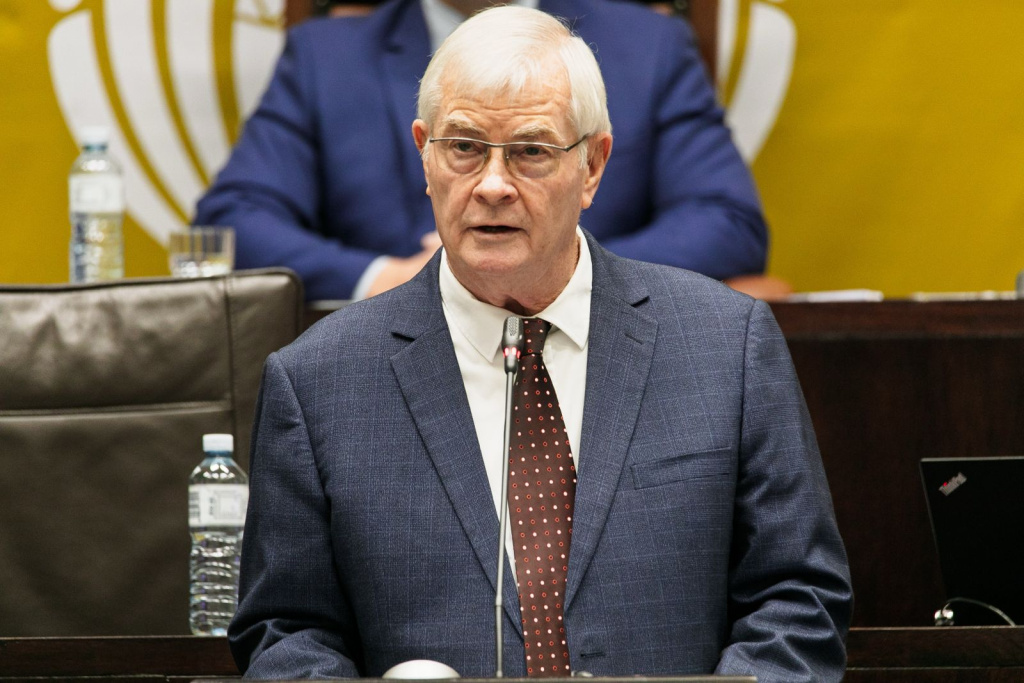
Flanked by Deputy Minister Lindiwe Ntshalintshali and National Commissioner Makgothi Thobakgale, the Minister acknowledged key pressures facing the Department, including overcrowding of 58%, rising inmate numbers, and the loss of experienced officials. However, he stressed that progress is being made in stabilising the system and restoring hope.
“Although it will be easy to reflect on the many mistakes, shortcomings and difficulties we face, it is imperative that we do not lose sight of the progress we have made. Day by day, we are restoring hope,” Dr Groenewald said.
Stronger security response
The Minister highlighted a significant escalation in security operations, including a 200% increase in raids – from 466 to 1,406; resulting in the confiscation of more than 37,500 cell phones and other contraband. During Operation Vala over the December/January period, more than 8,000 cell phones and R102,700 in cash were seized, with no recorded escapes.
He announced a strict zero-tolerance approach to cell phone use in correctional facilities.
“Failure to confront those who betray their duties endangers the many honourable officials working in dangerous conditions,” the Minister said, warning that smuggling networks within facilities will be decisively dealt with.
Self-sufficiency delivering real savings
With more than 70% of the R30.939 billion budget allocated to compensation of employees, leaving limited operational funding, the Department continues to prioritise self-sufficiency initiatives.
Twelve bakeries are now operational nationwide, generating savings of more than R77.1 million in 2025/26, while agricultural production contributed a further R125 million in savings. The Witbank Textile Workshop also produced 40,869 uniform items, reflecting increased internal production capacity.
A thirteenth bakery at Qalakabusha is nearing completion.
“These initiatives are not only cost-saving, but also powerful rehabilitation tools that equip offenders with skills and restore dignity,” Dr Groenewald said.
Accountability and institutional discipline
The Minister reaffirmed a zero-tolerance stance on misconduct, noting that 2,388 disciplinary cases were processed during the reporting period, with 2,138 finalised. Of these, 137 cases involved contraband-related offences.
He also announced the reintroduction of long-service medals recognising officials with 10, 20, 30, and 40 years of service. A total of 187 officials have already been honoured for 40 years of service, representing over 7,480 years of institutional experience.
Rehabilitation and reintegration at the centre
Deputy Minister Lindiwe Ntshalintshali reinforced the Department’s focus on rehabilitation, dignity, and reintegration, emphasising that correctional services extends beyond facility walls into communities.
“Our resilience is not defined by endurance alone, but by our ability to adapt, to build, and to deliver in concert with others,” she said.
She highlighted ongoing collaboration with the Department of Health on the transfer of state patients to psychiatric facilities, alongside continued improvements in TB and HIV management within correctional centres.
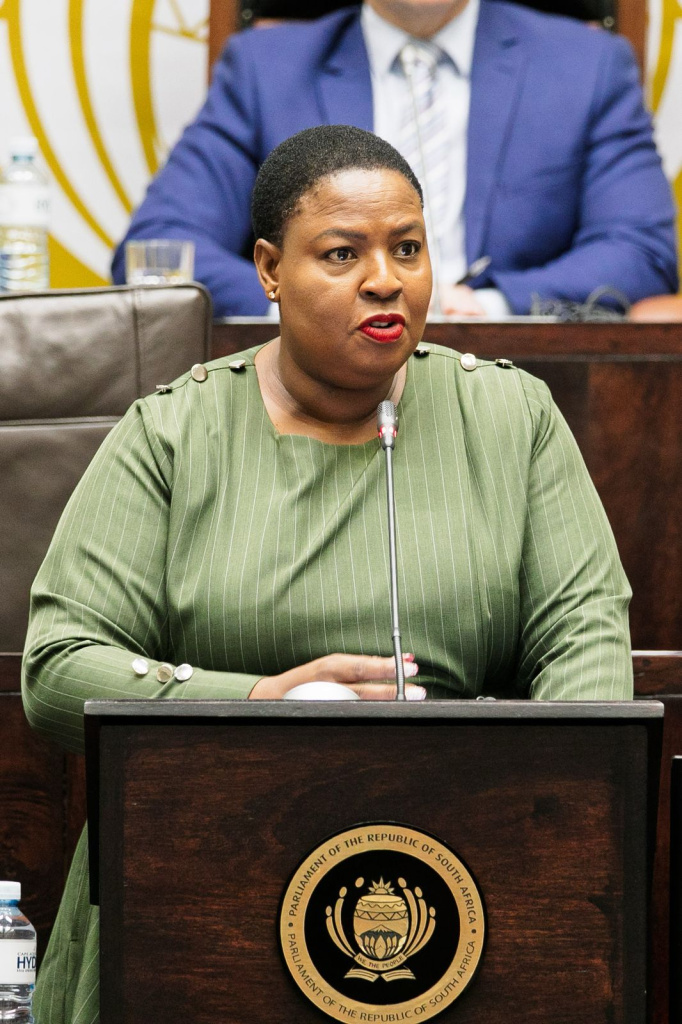
On social reintegration, she reported that 633 economic opportunities were facilitated in the third quarter of 2025/26 alone, with training provided in sectors such as renewable energy, welding, plumbing, and bricklaying. These initiatives include participation from parolees, victims of crime, and community members.
The Department has also conducted 257 community izimbizo, while more than 22,000 parolees and probationers have participated in community-based programmes, including home renovations and food garden projects.
“These programmes are building pathways to self-reliance and reducing the risk of reoffending,” the Deputy Minister said.
Building safer communities through partnerships
Deputy Minister Ntshalintshali concluded by reaffirming that DCS is strengthening partnerships across government, civil society, traditional leadership, and education institutions to support rehabilitation and community reintegration.
“This Department stands not only as a resilient institution, but as one that is deliberately building, learning, and integrating,” she said. “We are advancing a shared goal: a safer South Africa.”