
The Department of Correctional Services (DCS) celebrated officials who have turned gardening into an expression of sustainability, discipline and creativity during the inaugural Minister’s Garden Competition Prize-Giving Ceremony held at Malmesbury Correctional Facility on Monday, 21 September 2026.
Minister of Correctional Services, Dr Pieter Groenewald, who initiated the competition after assuming office in July 2024, delivered the keynote address under the theme, “Life is a Garden.”
Reflecting on the origins of the competition, Dr Groenewald recalled his first engagement with DCS officials shortly after taking office.
“I became Minister on 3 July 2024, and my first address to officials was in August, where I said I want to see the return of a garden competition,” Dr Groenewald said.
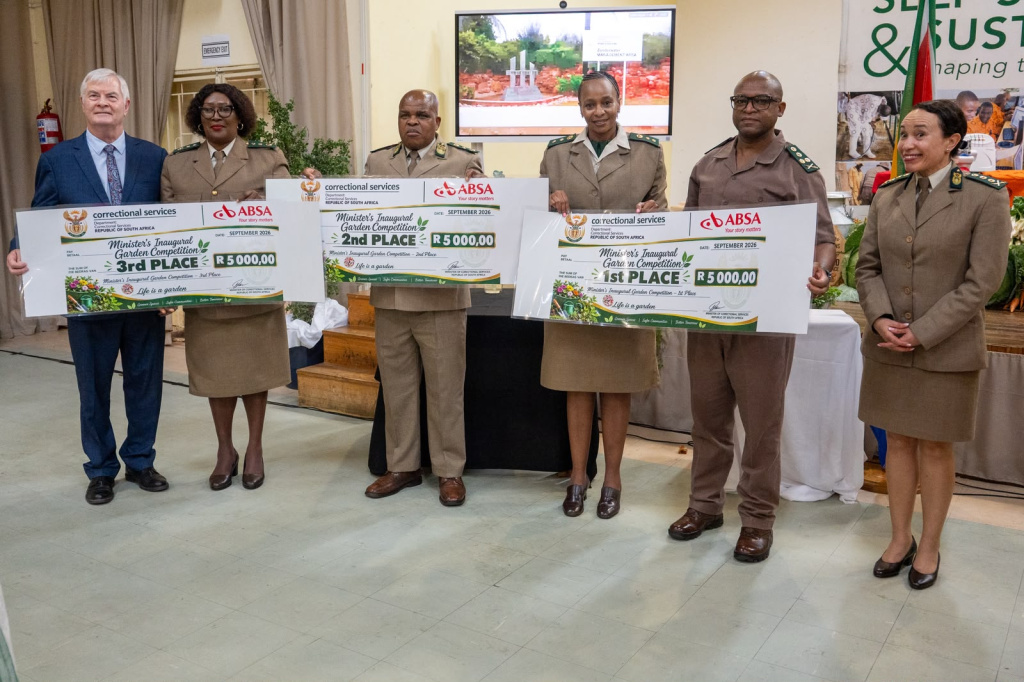
The competition recognises officials who contribute to greener living and the development of sustainable and well-maintained gardens. Each DCS region submitted three finalists in each of the two categories.
Category A focuses on officials’ residences, while Category B recognises gardens at correctional centres, offices and training institutions.
Dr Groenewald described gardening as both a discipline and a therapeutic activity, particularly for officials working in the demanding correctional services environment.
“I know that officials in correctional services are under tremendous pressure. We have an overcrowding problem,” he said. “By working in a garden, by using your creativity and energy, you will relax because gardening is therapeutic.”
He further highlighted the importance of maintaining attractive and well-kept gardens at correctional facilities, describing them as an important reflection of the environment within the institution.
“If I visit one of our centres, I look at the garden. If the garden is not up to standard, I can assure you, you will find the same circumstances in the facility,” he said. “If it is a decent garden, then I already know that this facility is functioning correctly.”
Self-Sufficiency and Skills Development
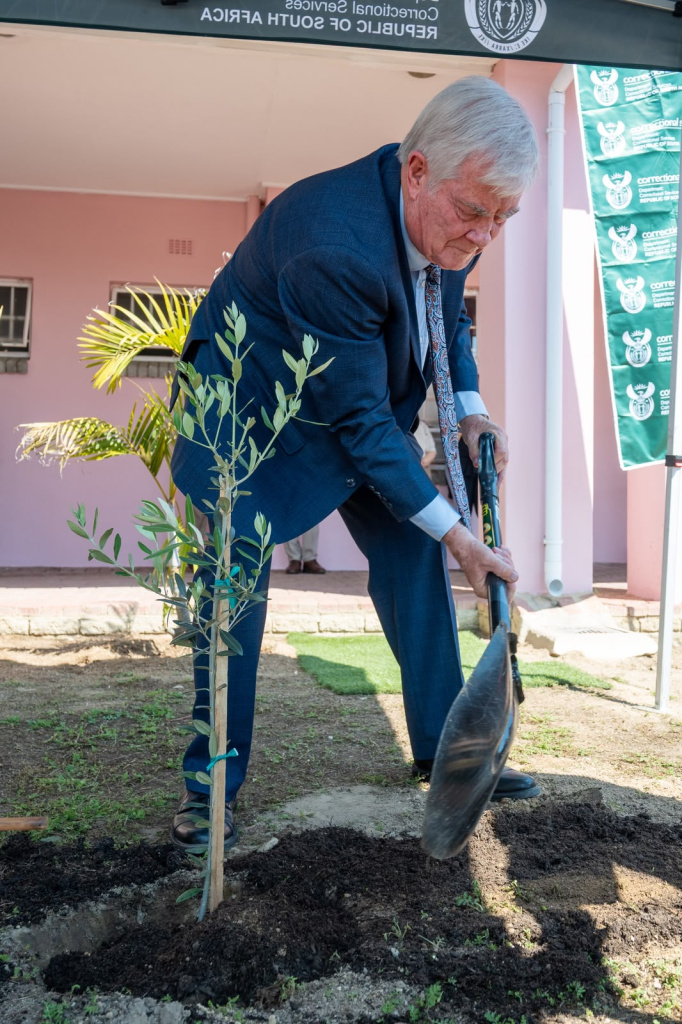
The Minister linked the garden competition to the department’s broader Self-Sufficiency and Sustainability (SSS) Framework, which promotes skills development and productive activities, including agriculture, steelwork, woodwork and leatherwork.
He said participation in agricultural activities can help offenders develop responsibility, patience and a sense of purpose.
“If you have an offender who is part of the agricultural sector, he or she is creating responsibility – planting something, nurturing it, and then seeing the growth. That gives them hope for the future,” he said.
Dr Groenewald also highlighted the broader economic value of self-sufficiency initiatives, saying they contribute to reducing dependence on public resources.
National Commissioner of DCS, Mr Makgothi Thobakgale, said the competition had translated the Minister’s vision into practical action.
“Ideas are born to produce, and the Minister gave us an idea out of his vision, and we ended up being productive,” National Commissioner Thobakgale said.
He said the competition was about more than simply planting and maintaining gardens, as it promoted sustainability, greener living, reducing the carbon footprint and hygiene.
“It was not only about what was planted, but about the connection between the one who plants, the one who takes care of the garden, and the garden itself – a connection that needed time, dedication, care and consistency. Above all, it needed discipline,” he said.
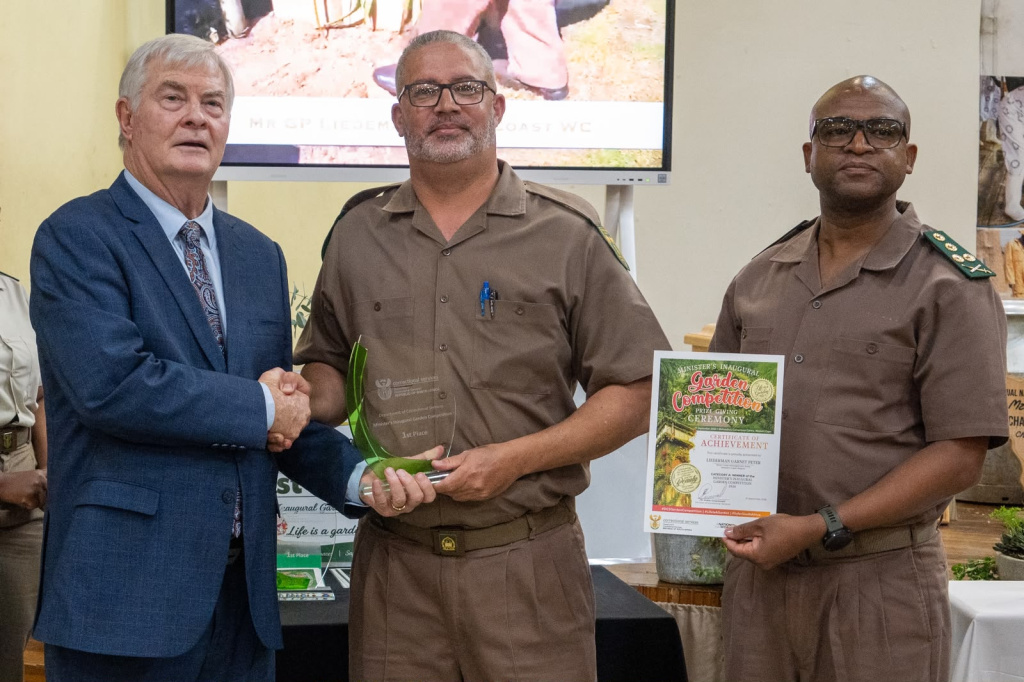
Category A Winner: Mr Garnet Liedermann
Mr Garnet Liedermann of the West Coast Management Area, representing Malmesbury Correctional Centre, was the Category A winner.
Sharing his experience, Mr Liedermann said the Western Cape’s soil should not be underestimated when it comes to gardening.
“People ask how it is possible that a garden in the Western Cape can win, because usually people perceive the ground as poor. But the ground here is very good for gardening,” he said. “It is just a matter of adding fertiliser and compost, and the ground does the rest.”
Among the plants in his garden is spekboom, an indigenous South African plant which he described as one of his favourites.
“It is very easy to manipulate the growth of the plant to get it into the shape you want. It also has health benefits – you can take the leaves and use them in a salad. It has a very high content of vitamin C and magnesium,” he said.
For Mr Liedermann, gardening provides a deep sense of fulfilment and allows him to create a welcoming environment for his family.
“Opening my door in the morning and the first thing I see is a beautiful garden – the Lord’s work of which I am part of maintaining. It makes your house a home for your family,” he said.
Category B Winner: Zonderwater Management Area
The Zonderwater Management Area emerged as the Category B winner, with Acting Area Commissioner Ms Thalita Tshehla accepting the award on behalf of the Management Area.
Ms Tshehla attributed the achievement to teamwork and the Management Area’s commitment to self-sufficiency and sustainability.
“Gardening is not just a hobby to us – gardening is life,” she said. “Zonderwater works as a team. Zonderwater is a Self-Sufficiency and Sustainability (SSS) management area where we complement everything that comes from the soil.”
Her comments reflected the department’s broader approach to using agricultural and gardening activities to promote productivity, sustainability and skills development across its facilities.
Cultivating a Culture of Change
In his closing remarks, Dr Groenewald encouraged officials to embrace the spirit of the competition beyond the prize-giving ceremony.
“Correctional officials are like society’s gardeners, planting seeds of hope, discipline and change while guiding offenders through rehabilitation,” he said. “Each action is a seed. We may not see the harvest, but it was planted.”
The Minister called on officials to continue nurturing their workplaces, wellness, relationships and communities.
“Let us continue planting seeds of hope, nurturing transformation, and cultivating a better South Africa – one life, one person, one community, and one garden at a time,” he concluded.
The inaugural Minister’s Garden Competition demonstrated how a simple garden can become a platform for promoting environmental responsibility, teamwork, discipline and wellbeing, while supporting DCS’ broader commitment to self-sufficiency and sustainability.