
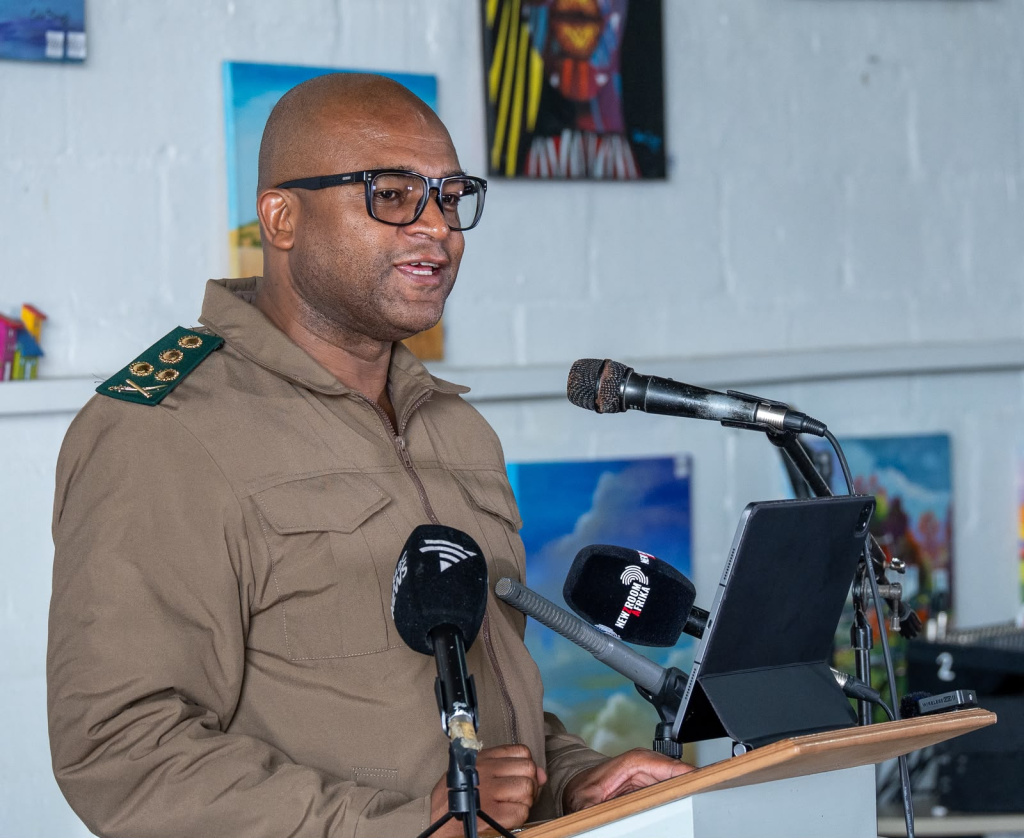
The Department of Correctional Services (DCS) launched Corrections Week 2026 on Monday, 21 September, at the Goodwood Art Gallery in the Western Cape Region, placing rehabilitation, restoration and community reintegration at the centre of this year’s awareness campaign.
Held under the theme, “Correcting Offending Behaviour, Restoring Dignity and Rebuilding Communities through Arts and Crafts”, Corrections Week encourages South Africans to visit DCS arts and crafts galleries and exhibitions across the country and experience first-hand how creative programmes contribute to rehabilitation.
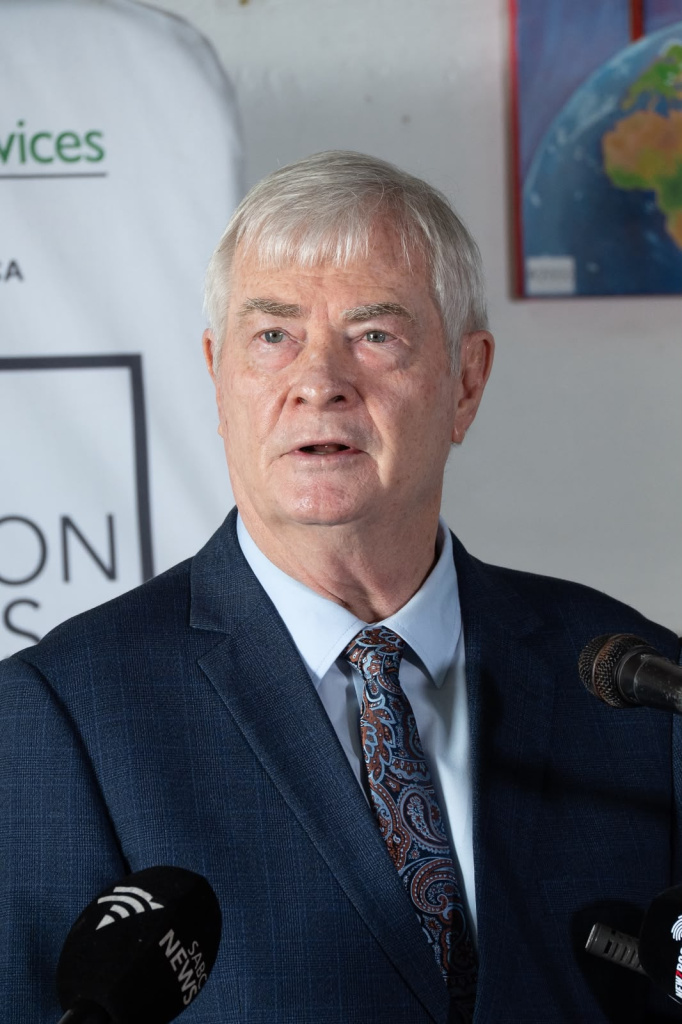
Delivering the keynote address, Minister of Correctional Services, Dr Pieter Groenewald, said Corrections Week provides an opportunity to highlight rehabilitation as an important component of the correctional system and to encourage society to support the reintegration of offenders.
“The Department of Correctional Services is mandated to correct offenders’ offending behaviour through rehabilitation and to facilitate their reintegration into society,” said Dr Groenewald. “One of the primary focus areas of our self-sufficiency and sustainability initiatives is commercialising offender arts and crafts.”
Through arts and crafts programmes, offenders are provided with opportunities to acquire practical skills while expressing their creativity. A wide range of products is produced using state-procured materials, including woodwork, steelwork, textiles, sewing, leatherwork, beadwork, painting and other forms of art.
The products are displayed and sold through DCS galleries, with the proceeds contributing towards the department’s operational objectives and supporting its rehabilitation and self-sufficiency initiatives.
The scale of participation demonstrates the reach of these programmes. During August 2026, 11 075 offenders participated in arts and crafts programmes across DCS’ six regions. The Goodwood exhibition features more than 2 200 pieces, while sales of offender-produced arts and crafts through DCS galleries over the past two financial years generated R138 462 in revenue.
A Society-Wide Responsibility
DCS National Commissioner, Mr Makgothi Thobakgale, said Corrections Week provides an important opportunity for the department to open its doors and demonstrate to the public that correctional services extend beyond incarceration.
“It is not only about incarceration, but it is also about rehabilitation, restoration and reintegration,” he said. “What you see today in this gallery is not just art. It is discipline. It is skills training.”
National Commissioner Thobakgale encouraged members of the public to visit the nine DCS galleries and exhibitions during Corrections Week. These are located in Goodwood, Grahamstown, Pietermaritzburg, Empangeni, Kokstad, Kgoši Mampuru II, Leeuwkop, Groenpunt and Klerksdorp.
He said public support for offender-produced arts and crafts contributes to the broader objectives of rehabilitation and community restoration.
“When the public purchases these offender arts, crafts and artefacts, they are restoring dignity and helping to rebuild communities,” he said. “This directly contributes to safer communities, reduces reoffending, and reduces reliance on the fiscus, as revenue is reinvested into rehabilitation programmes.”
Art as Therapy and Transformation
Behind the statistics are individual stories of perseverance, talent and personal transformation.
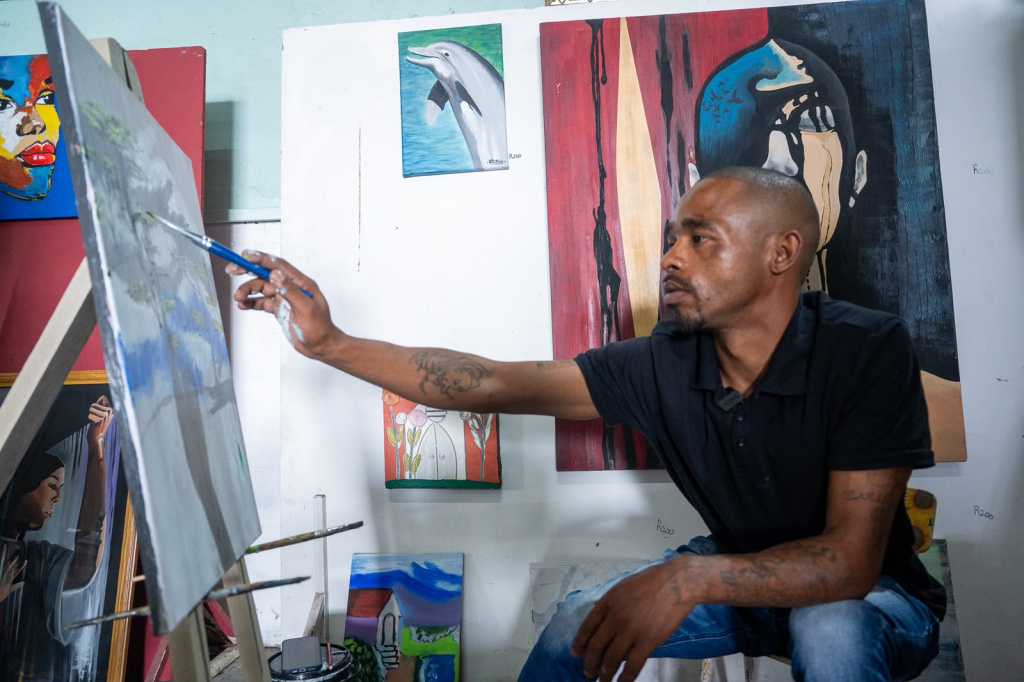
For Goodwood artist and parolee Mr Michael Sauls, art has become an important part of his journey towards rebuilding his life.
“For me, this is like therapy,” he said. “Without it, it’s very easy to get lost in this world.”
Mr Sauls walks a considerable distance each day to reach the gallery. Although painting has been part of his family’s history, he says he only recognised his own passion for the craft later in life.
“The passion for painting was always there. But I just never took note of it,” he said.
Through the programme, he has developed not only his artistic abilities but also discipline and a deeper understanding of himself.
“It teaches you to dig deep into yourself because without knowing who you really are, your true potential won’t come out,” he said.
Among his works is a portrait of Jesus Christ, which he describes as an expression of gratitude for the role of faith in his journey.
“Through all my journey, through all my struggles and hardship, He’s always been there for me. That painting is just me saying, thank you, Lord,” he said.
Mr Sauls hopes to own a home and a car, exhibit his work in galleries around the world and teach children in his community how to paint. He believes art can provide young people with positive alternatives to crime and gangsterism.
Skills for an Honest Living
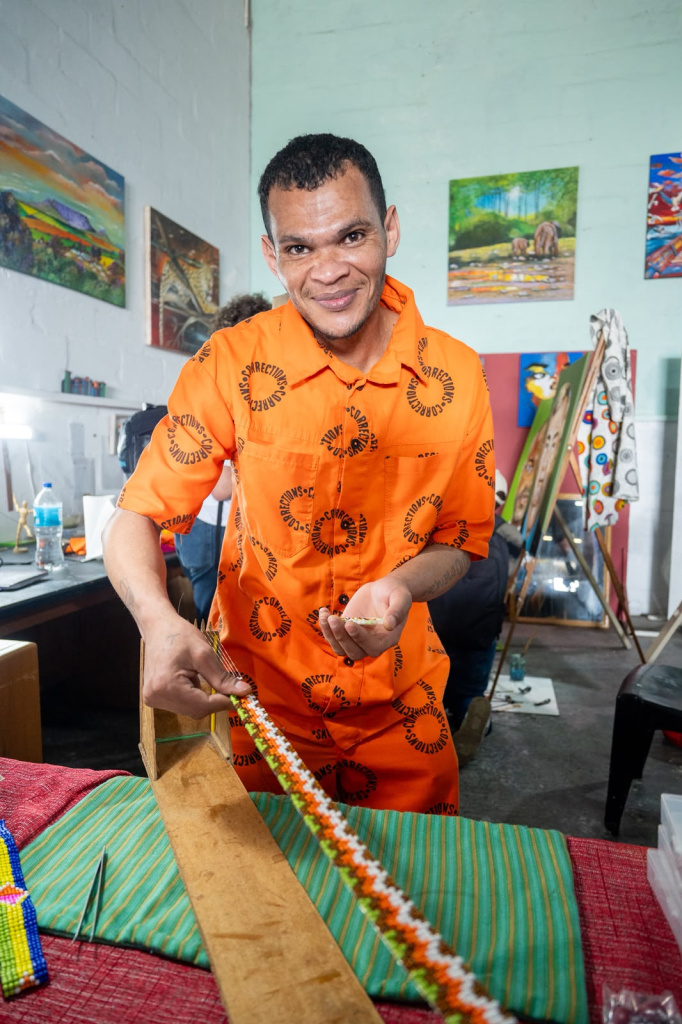
For Offender Julian Heyns, 29, the skills acquired through the arts and crafts programme represent an opportunity to establish an honest livelihood after his release.
Incarcerated at Goodwood Correctional Centre, Offender Heyns showcased his beadwork at the Corrections Week launch. He said the skills he has acquired will enable him to pursue productive work and contribute positively to his community.
He also hopes to use his skills to support young people in his community by teaching them beadwork and encouraging them to pursue constructive activities rather than becoming involved in crime.
His vision reflects one of the central objectives of rehabilitation; equipping offenders with skills that can support responsible and productive lives beyond incarceration.
A Call to Support Rehabilitation
Dr Groenewald called on members of the public, businesses and community stakeholders to visit the DCS galleries and exhibitions and support the artists by purchasing their work.
“The walls of a correctional centre should not define a person’s future,” he said. “The products here prove that those who made harmful choices can create, that talent can emerge unexpectedly, and that dignity and communities can be restored.”
He emphasised that rehabilitation cannot be achieved by government alone.
“Corrections is a societal responsibility,” said Dr Groenewald. “Together, we can correct behaviour, restore dignity, support victims, rebuild communities, and give genuine change-makers opportunities.”
Through Corrections Week 2026, DCS is inviting society to look beyond the walls of correctional centres and recognise the skills, creativity and potential that can emerge through rehabilitation. The arts and crafts galleries provide a tangible reflection of this journey; from incarceration towards skills development, personal growth and reintegration into society.