
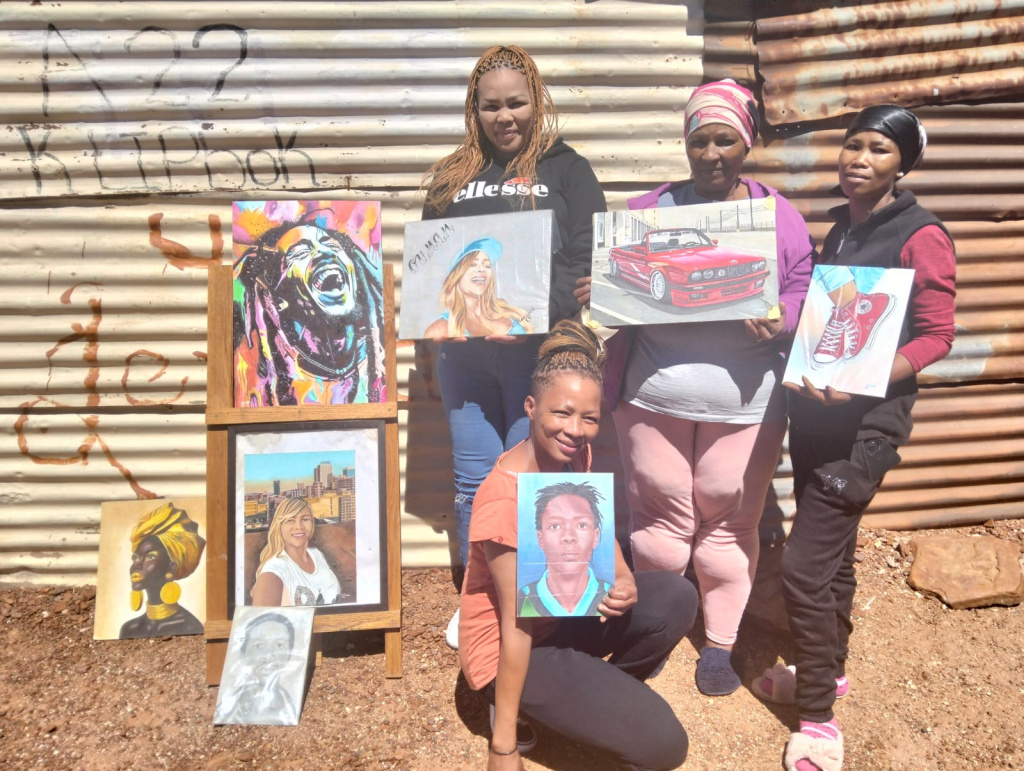
Correctional and rehabilitation programmes expose inmates to interventions that empower them and change their lives. In line with the Department of Correctional Services’ 2026 Corrections Week theme, the department continues to unearth, and nurture hidden artistic talent among inmates.
A case in point is Ms Ragel Plaatjies, a female parolee who discovered her talent as a fine artist behind bars. Dedicated DCS officials made this discovery possible.
Convicted and incarcerated for fatally stabbing her boyfriend, Ms Plaatjies saw her freedom slip away because she failed to control her temper. Although she alleges that he was abusive, she could have explored other avenues to stop him from beating her.
“My judgement failed me that day, and I ended up losing five and a half years of my life. I was convicted and sentenced to twelve years, with two of those suspended for five years,” she said. “I regretted my deeds almost instantly and even tried to resuscitate my boyfriend after realising what I had done. I never intended to kill him, but to get him to stop beating me. After this whole ordeal, I was in total disbelief that my boyfriend was no more. I even contemplated committing suicide, but the inner child in me told me not to. I then asked one of my neighbours to call the police on me so that I could be punished for my wrongs.”
She said incarceration is not ideal for any human being. “I started missing simple things like my cell phone and having those simple, pointless chats with my friends and family. But it also presented a rare opportunity for me to rediscover myself, do self-introspection and mend my ways through the help of devoted correctional officials,” she said.
One of the hidden talents she unearthed through this journey to self-discovery is her capability in artistry.
“I went to jail not even knowing how to hold a paint brush but look at me now. I was one of the best fine art students at my correctional centre,” Ms Plaatjies said. “One of the best personality traits I possess is that no matter how much I struggle with something, I always push myself to perfection. My paintings can capture one’s imagination and take you to a world you have never been. That is why they caught the eye of the Free State and Northern Cape Regional Commissioner, Ms Subashini Moodley during one of the events held in my hometown recently. I was humbled by her gesture and the great lengths she went to as she tried to expose me to dignitaries and MECs who were part of that event.”
The MEC for Economic Development and Tourism advised her to open and register a business. Ms Plaatjies would appreciate any support she may receive from state institutions, the private sector and private individuals. She does not have a studio to work from and currently uses her sister’s corrugated iron shack to do her artwork. She also needs financial backing to buy materials such as paints, paint brushes, canvases, a printer, and easels to display her artefacts.
Although Ms Plaatjies was born on a farm called FairField and grew up in the dusty streets of the impoverished town of Griewkastad in the Northern Cape, she is not constraining herself in terms of her ambitions.
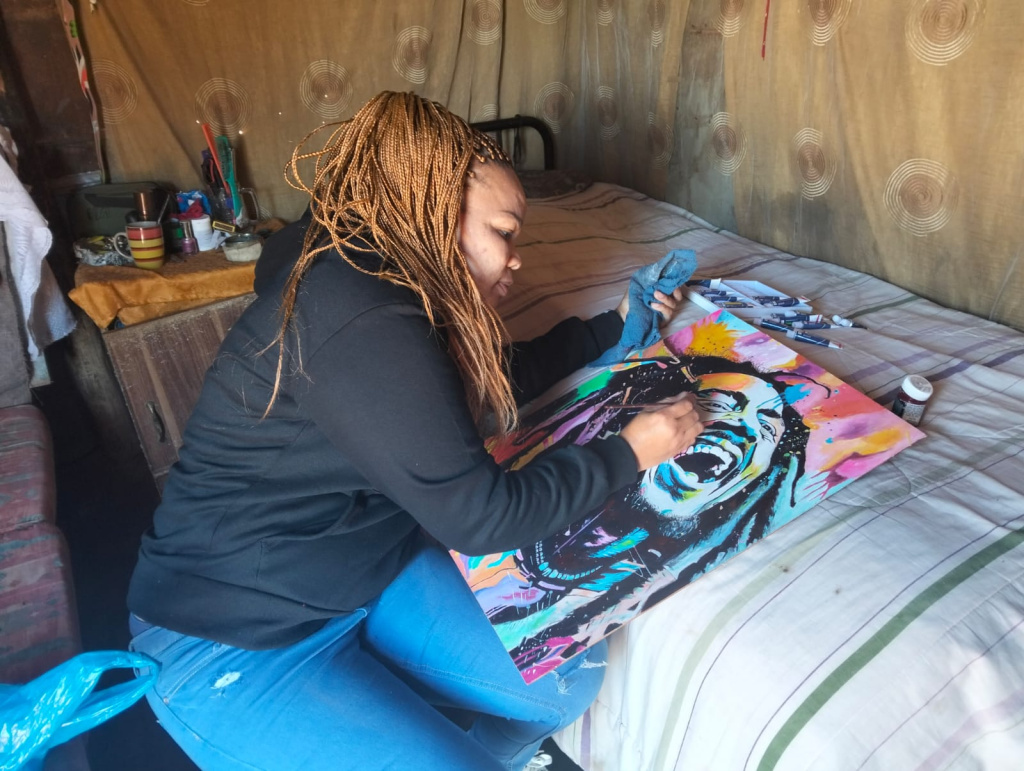
“I would also like to get an opportunity to gain access to platforms such as the Grahamstown Arts Festival and William Humphrey Art Gallery to showcase my artwork to the world,” she said.
Art is not the only skill Ragel possesses. She threw herself into the thick of things in terms of opportunities DCS presented to her. She also did beadwork, needlework and garmenting, a skill for which she has a certificate, but art has always been her first love.
Ragel is the sixth child of her parents, and they all live a humble life even today. She started her incarceration in 2021 in Kimberley and was released on parole on 31 August 2026. Although growing up was tough as her parents survived on the meagre salary her father brought home as a farm worker, Ragel never relented as she pursued her studies until matric. Due to family hardships, she had to abandon her dreams of going to tertiary and took piece jobs as a domestic worker, a cashier, and a cook to augment her father’s scanty salary.
Though emotionally fulfilling and assisting her to reintegrate into her community, Ragel sees art, and her skills thereto, as a rare opportunity to make ends meet and get her family out of the shackles of poverty. She beams with positivity and hopefulness for a better tomorrow and does not allow her past to determine her future. She believes art is a perfect vehicle to take her to her destiny.