
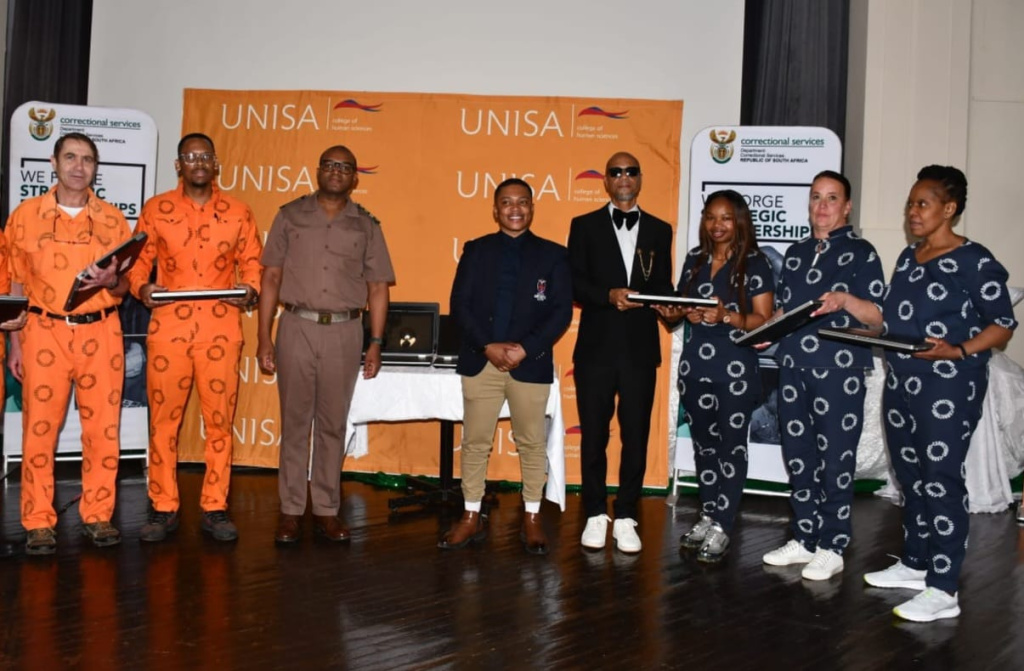
The Department of Correctional Services (DCS) has strengthened its efforts to advance offender education and rehabilitation through a donation of 38 laptops from the Inside-Out Outside-In South African Corrections Interest Group, an initiative involving stakeholders committed to education in correctional settings.
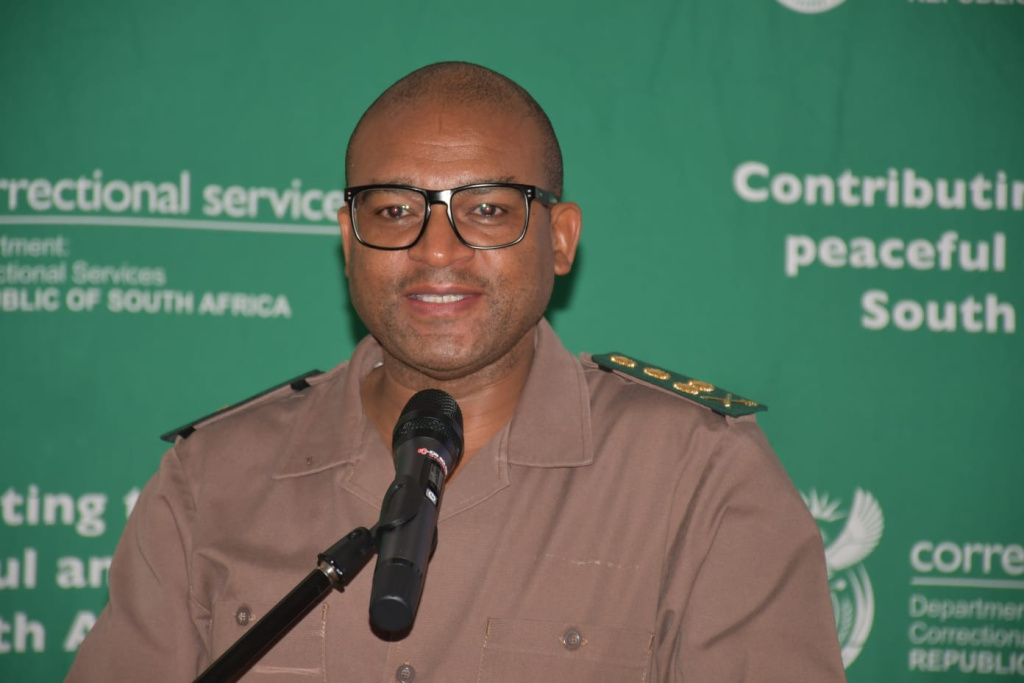
The handover ceremony took place at Kgoši Mampuru II Correctional Facility on 9 October 2026 and was attended by a DCS delegation led by National Commissioner Mr Makgothi Thobakgale.
The donated laptops will be distributed to three facilities: Losperfontein Correctional Centre in the Limpopo, Mpumalanga and North West Region, Kgoši Mampuru II Correctional Facility, and Atteridgeville Gender Responsive Centre in the Gauteng Region. The initiative aims to bridge the digital divide in correctional centres by providing offenders with access to technology-assisted learning and opportunities to develop essential computer skills.
The programme targets offenders with limited or no computer literacy. Through the Computing School at the University of South Africa (Unisa), participating offenders will have an opportunity to acquire foundational digital skills that can support further learning, improve their employability and strengthen their prospects of reintegration into society.
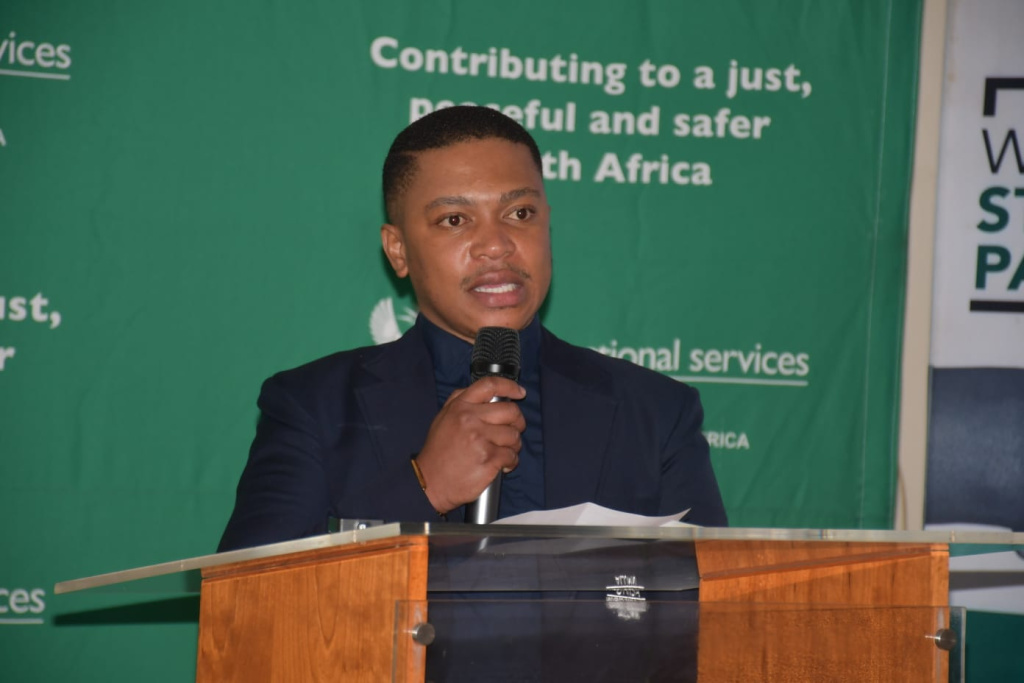
Delivering the keynote address, National Commissioner Thobakgale welcomed the donation, highlighting the importance of education in rehabilitation and the country’s broader development objectives.
“This donation is highly valued as the Department works towards achieving the National Development Plan’s Vision 2030 of improving the quality of teaching and learning through endeavours to rehabilitate offenders,” he said. “Education is a major driver of information and knowledge systems that contribute to economic development and good citizenship.”
He emphasised that the contribution extended beyond providing computers, noting that digital literacy had become an essential skill in a society increasingly shaped by technology.
“It is about opening doors to knowledge, addressing digital exclusion and equipping individuals with skills that are increasingly essential in today’s society,” said Thobakgale. “In a world where technology influences education, communication and employment, digital literacy is no longer a luxury. It is an important life skill.”
The National Commissioner also underscored the importance of responsible management and the effective use of the donated equipment. Before allocation, the Department’s Group Information Technology Office (GITO) conducted status and health checks on the laptops to ensure that they met the relevant information and communications technology (ICT) governance and security requirements.
He called on management at the beneficiary facilities to safeguard the equipment and ensure that it was incorporated into structured learning programmes to achieve the intended educational outcomes.
“We must measure the value of this donation not simply by the number of laptops received, but by the progress made by the learners who benefit from them,” he said.
Addressing the participating offenders, Thobakgale encouraged them to take full advantage of the learning opportunity and remain committed to their personal development.
“Be committed to your lessons, practise the skills you acquire and remain determined to improve yourselves. Your present circumstances do not have to define your future,” he said. “Every skill learned represents progress. Every completed lesson brings you closer to greater opportunities.”
Professor Lindokuhle Ubisi, Chair of the Department of Psychology at Unisa, delivered a message of support, reaffirming the value of collaboration in expanding educational opportunities for offenders. The Inside-Out Outside-In South African Corrections Interest Group brings together individuals from different disciplines who share an interest in educational issues relating to DCS.
Thobakgale stressed that partnerships between government, higher education institutions and civil society were essential to broadening access to learning and development opportunities within correctional facilities.
“Government cannot achieve its objectives alone. Partnerships with institutions of higher learning, civil society and other stakeholders are essential in expanding access to education and development opportunities,” he said. “The collaboration between the Department, Unisa and the Inside-Out Outside-In South African Corrections Interest Group demonstrates what can be achieved when organisations unite behind a common purpose.”
The laptop donation reinforces the role of education and digital skills development in rehabilitation. By equipping offenders with practical knowledge, the initiative seeks to prepare them for further learning, participation in the economy and successful reintegration into their communities after release.