
In the rolling hills of Barberton, Mpumalanga, agricultural activities at the Department of Correctional Services (DCS) demonstrate how farming contributes to rehabilitation, food production and the efficient use of public resources.
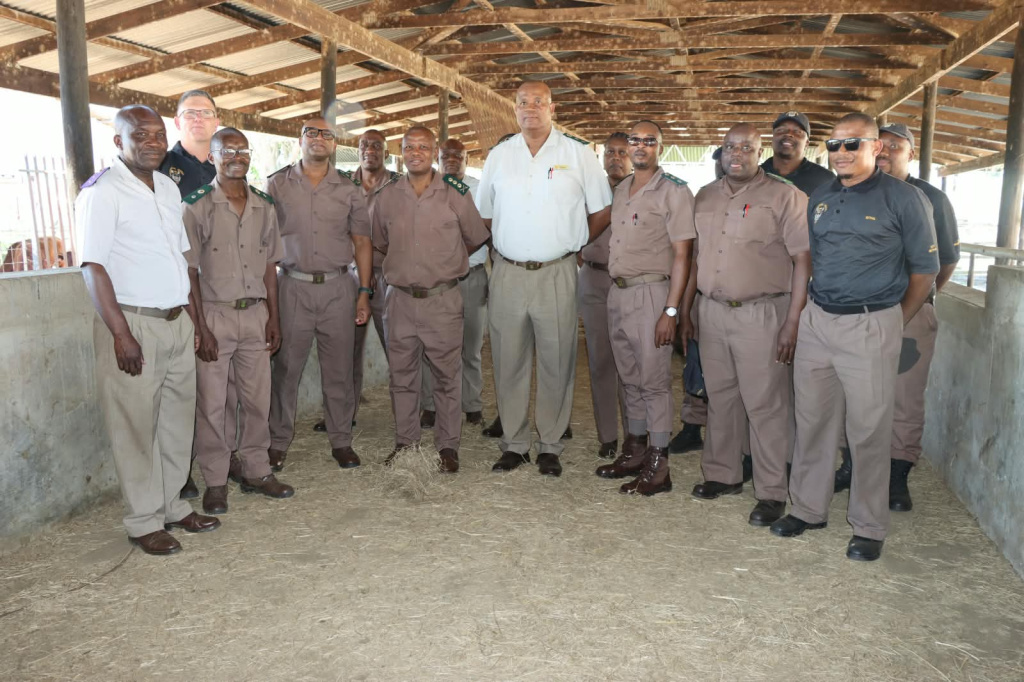
On Friday, 16 October 2026, National Commissioner of the Department of Correctional Services, Mr Makgothi Thobakgale, accompanied by the Regional Commissioner for Limpopo, Mpumalanga and North West, Mr Tlabo Thokolo, conducted an operational visit to the Barberton Management Area. The visit focused on assessing agricultural operations, examining infrastructure, identifying security challenges and evaluating the facility’s contribution to the Department’s Self-Sufficiency and Sustainability (SSSF) Strategic Framework.
The leadership delegation toured the 1,541-hectare facility, including the cattle kraal and other agricultural projects, engaging with officials responsible for the various enterprises.
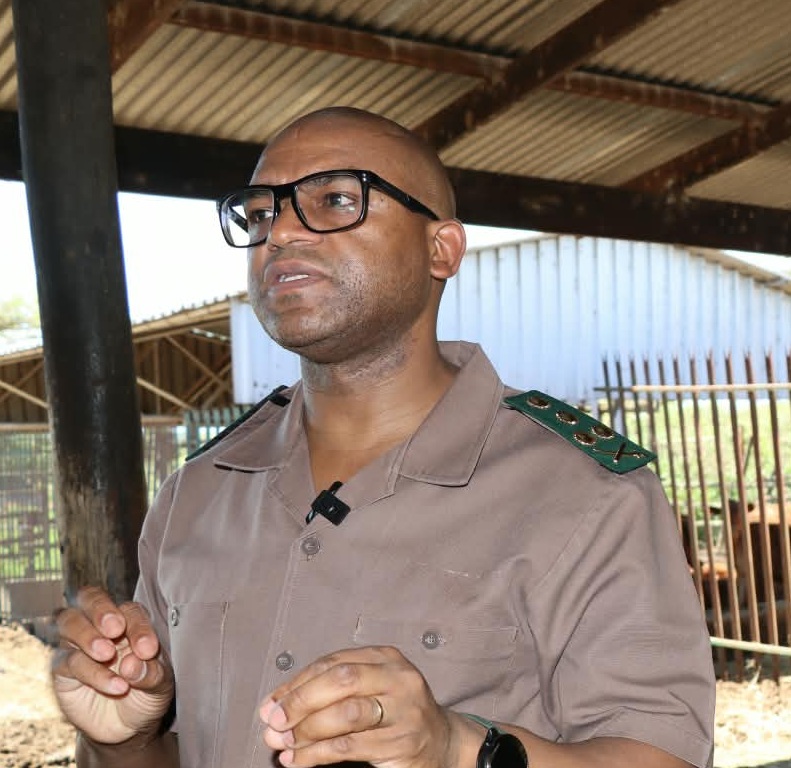
Addressing officials, National Commissioner Thobakgale explained that his regular visits to Barberton were intended to give him a first-hand understanding of the facility’s operations and challenges.
“When we engage in discussions about our work, opinions are supposed to be formed from a position of knowing or having sufficient information,” he said.
Security featured prominently during the visit, with concerns raised about intrusions and illegal mining activities, commonly associated with zama zamas, in areas adjacent to the farm. These activities pose a threat to livestock, crops and the security of agricultural operations.
The National Commissioner said the Department was working with the South African Police Service (SAPS) and neighbouring farmers to strengthen security and prevent criminal activities. He confirmed that arrests had recently been made following incidents involving intruders.
“We have noticed challenges with what is happening adjacent to the farm, with intruders coming in wanting to steal stock and steal whatever we would have planted,” he said.
Despite these challenges, Barberton Management Area continues to make a significant contribution to the Department’s SSSF. Agricultural production helps reduce the cost of providing food to inmates while supporting the Department’s efforts to use available resources more efficiently.
“We depend on the farm produce to reduce the cost of feeding the inmates. If we produce less, we have to buy more. Therefore, it is important for us to continue to increase our production,” Mr Thobakgale said.
Acting Area Commissioner, Mr Noah Nkosi, outlined the facility’s agricultural output, which includes 26 hectares of land planted with vegetables such as beetroot, carrots, cabbage and spinach.
The facility’s bakery produces 1,920 loaves of bread daily, while its dairy project has 40 cows, each producing an average of 19 litres of milk per day. The piggery has 962 pigs, further strengthening the facility’s food production capacity.
Surplus vegetables and pork are also supplied to other management areas, including Bethal, Witbank and Klerksdorp. This distribution supports food provision across the Department while making productive use of the facility’s agricultural resources.
Beyond agricultural production, the National Commissioner commended Barberton Management Area for achieving a 100% matric pass rate and maintaining a record of zero gang-related incidents. He encouraged officials to sustain these achievements while continuing to improve infrastructure, strengthen security and increase production.
The visit reaffirmed the importance of effective management, staff commitment and sustainable agricultural practices in advancing the Department’s objectives. The regional leadership committed to assisting Barberton Management Area in addressing the issues identified during the visit.
Through its agricultural enterprises, Barberton Management Area continues to demonstrate the value of self-sufficiency in reducing operational costs, supporting rehabilitation and contributing to the effective delivery of correctional services.