
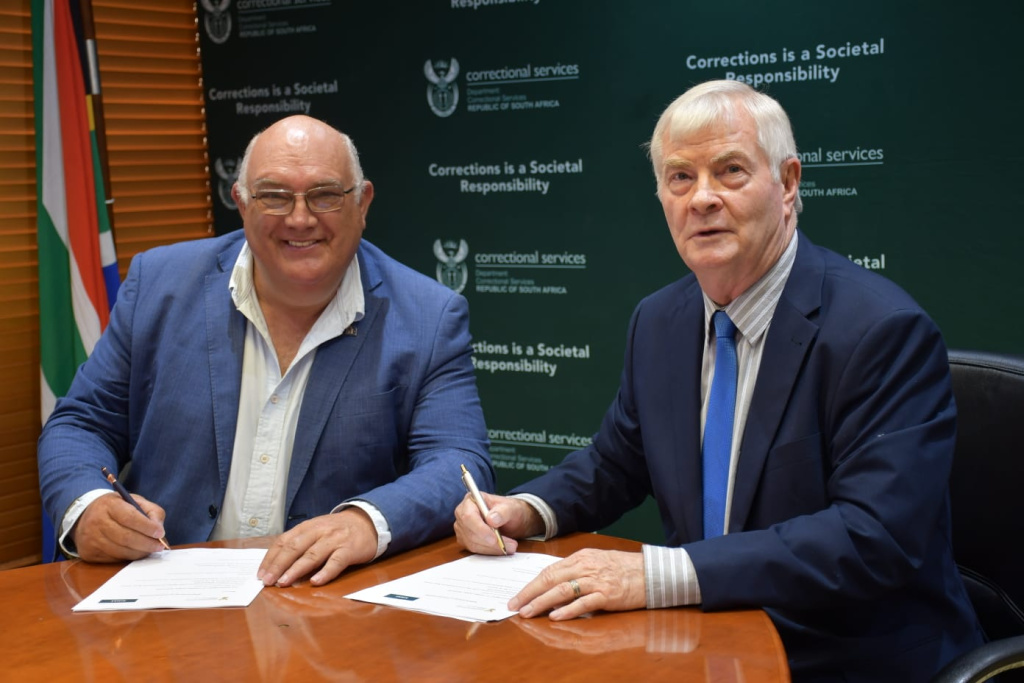
Seeds planted behind bars can yield opportunities beyond incarceration. The Department of Correctional Services (DCS) has entered into a partnership with the Southern African Agri Initiative (Saai) to strengthen agricultural skills development among offenders and improve their prospects of employment and self-sufficiency upon release.
On 28 October 2026, Minister of Correctional Services, Dr Pieter Groenewald, signed a Memorandum of Understanding (MoU) with Saai Executive Director, Dr Theo de Jager, to establish a partnership that will equip offenders with accredited agricultural skills and support their rehabilitation and successful reintegration into society.
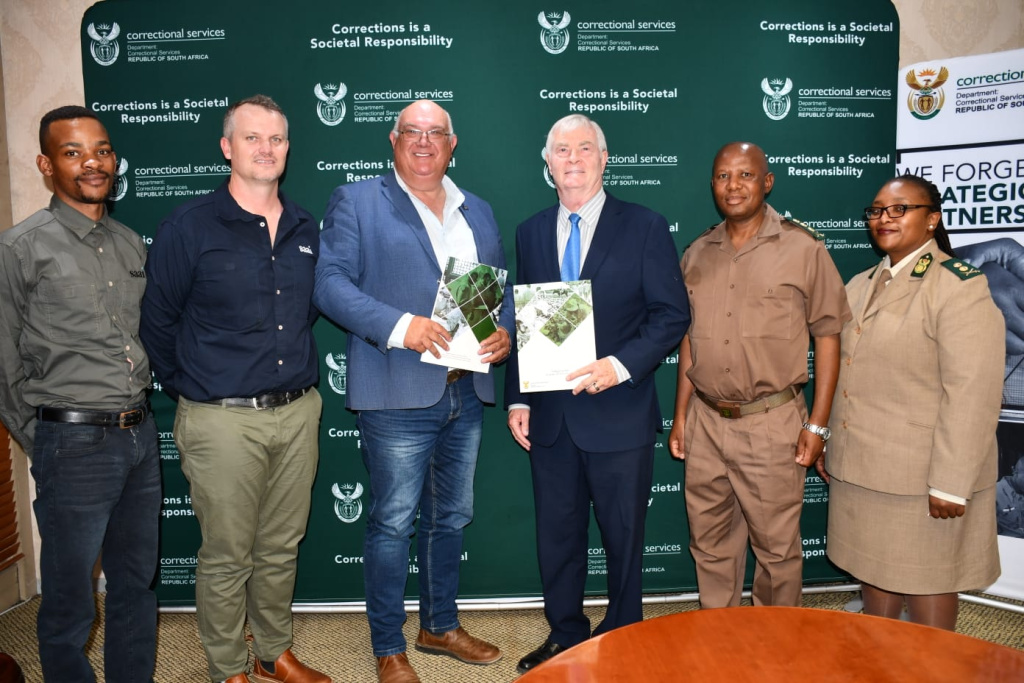
Minister Groenewald said the partnership aims to establish a sustainable working relationship that delivers practical results in developing offenders’ skills.
“Skilled offenders have better chances of finding employment upon reintegration into society. This will also decrease recidivism, as offenders will not be idling without any skills,” he said. Saai is an agricultural interest network run by farmers, for farmers. It represents and promotes the rights, values, ideals and interests of family farmers in the primary production sector.
Minister Groenewald said the partnership aligns with the department’s rehabilitation mandate and will contribute to agricultural development without placing an additional financial burden on the taxpayer. “This is an organisation that believes in Southern African initiatives for farmers. This Memorandum of Understanding aligns with the core function of Correctional Services when it comes to rehabilitation. This project will not cost the taxpayer a single cent because Saai does it on its own initiative, and its sole objective is to enhance agricultural activities across the different sectors and facets of South Africa,” he explained.
Through the partnership, offenders will have opportunities to acquire accredited agricultural qualifications, while the department will strengthen its agricultural production initiatives in support of its Self-Sufficiency and Sustainability Framework. Dr de Jager said Saai represents people whose livelihoods depend on agriculture, regardless of their background or the size of their farming operations.
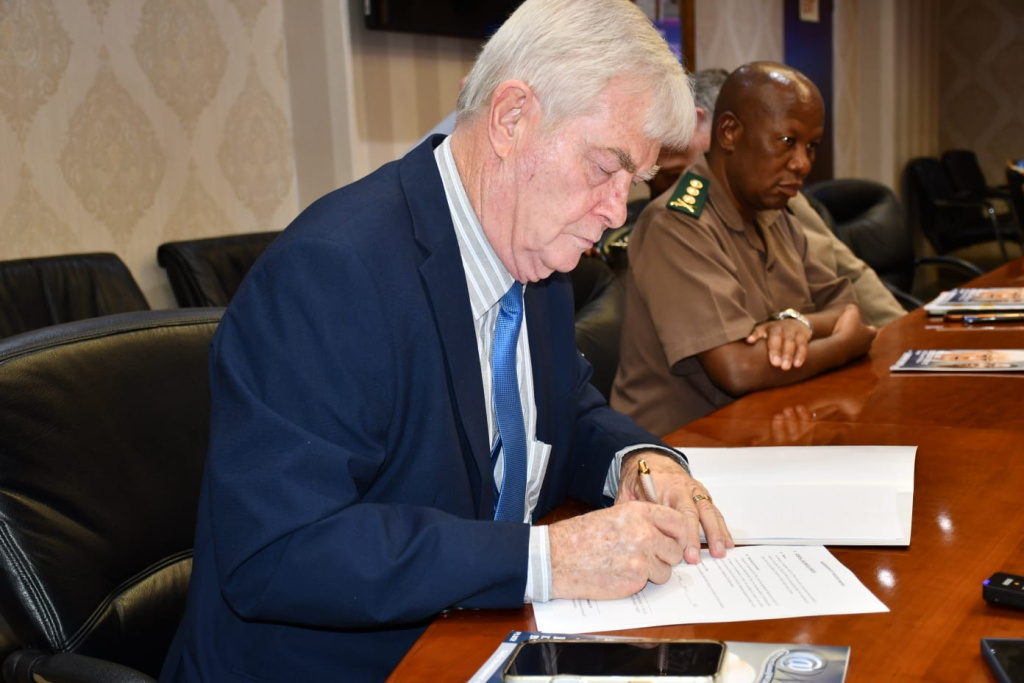
“A family farmer in our Southern African context is not rich or poor, big or small, Black or white, well-established or a newcomer. It is a family seeking a living from the soil. That is why we joined this partnership,” he said. He added that Saai’s work extends beyond agricultural representation to include farm safety initiatives, through which it supports farmers with communication equipment such as radios and cameras to help protect their farms. “We need to do more than that, hence this initiative to partner with the Department of Correctional Services,” he said. Dr de Jager said the partnership would give offenders an opportunity to acquire practical knowledge, gain exposure to agricultural technologies and understand how the agricultural value chain operates in a market-driven environment.
“We trust that we can transfer skills to them and give them exposure to technologies and the value chain, so that they understand how market-driven agriculture works. Our ambition goes far beyond preparing them for employment on farms. We also want to create a class of new, profitable farmers,” he said. The partnership reinforces the department’s efforts to use skills development and agricultural production as tools for rehabilitation. By equipping offenders with relevant, accredited skills, DCS aims to improve their employment prospects, promote self-reliance and support their transition into productive members of society after release. Through initiatives such as this, the department continues to advance rehabilitation programmes that contribute to offender development, agricultural self-sufficiency and safer communities.