
News
Restoring Lives, Strengthening Communities: A Career in Correctional Social Work
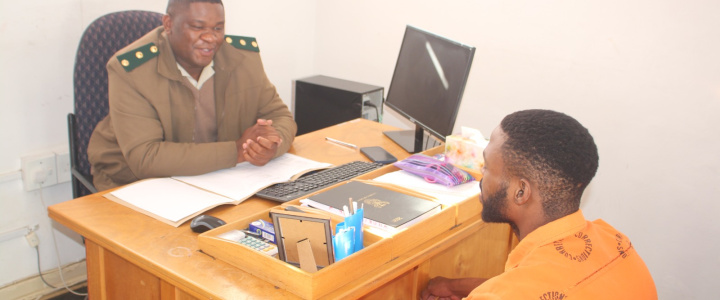
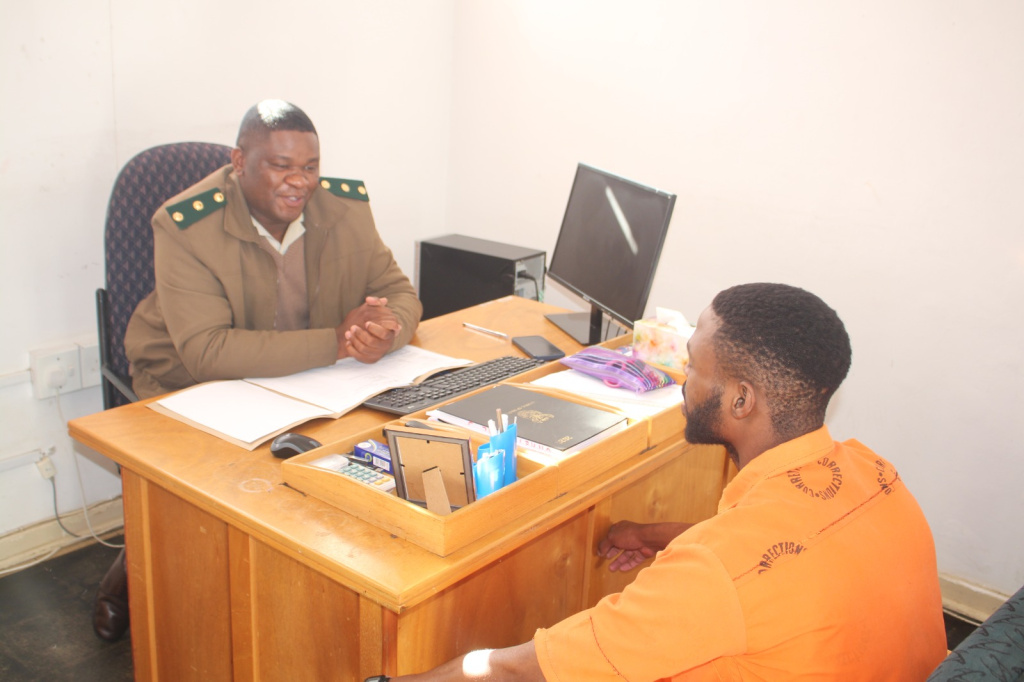
For Social Work Supervisor Onkemetse Joseph Mogapi, social work within the Department of Correctional Services (DCS) is far more than a profession – it is a calling to restore hope and create opportunities for lasting change.
With nine years of experience at Bethal Correctional Centre, Mogapi oversees and mentors a team of social workers, ensuring quality rehabilitation and psychosocial services reach offenders. His responsibilities include supervising case management, guiding professional development, ensuring compliance with departmental policies, and collaborating with multidisciplinary teams to support offender rehabilitation and reintegration.
A Belief in Second Chances
Mogapi’s decision to pursue social work in corrections was driven by a firm belief that every individual deserves dignity and an opportunity to change.
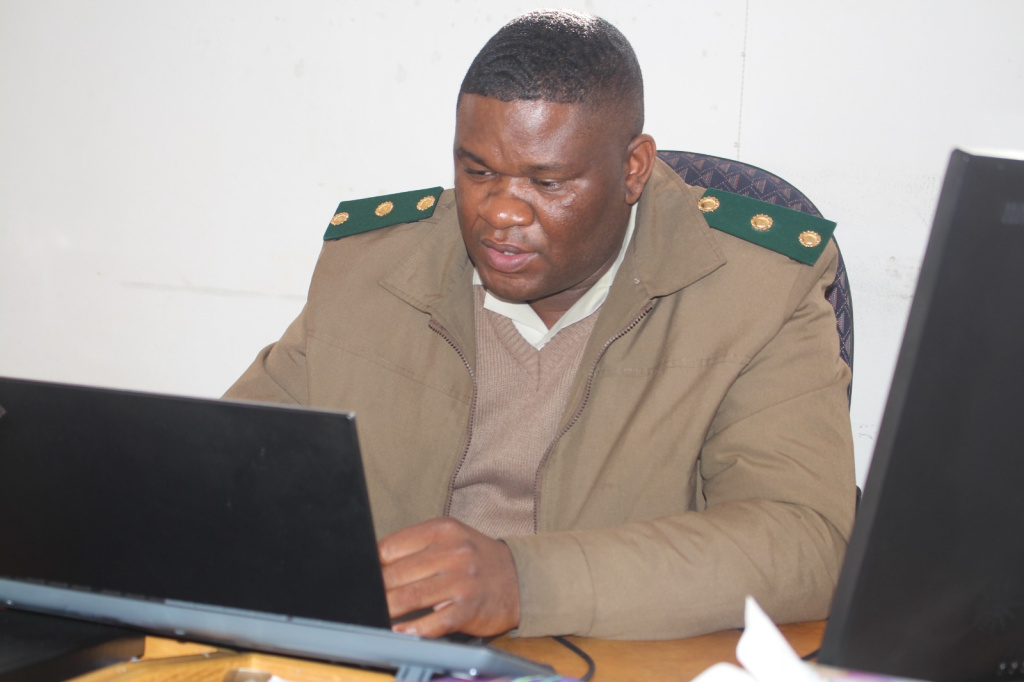
“Crime, trauma and broken systems affect not only offenders but their families and communities too,” he explains. “Real transformation happens when we address the root causes of offending behaviour, including poverty, substance abuse, trauma, anger and the lack of support systems.”
Through comprehensive holistic assessments, social workers identify psychosocial challenges and develop interventions that address individual needs. Their focus extends beyond correcting behaviour to restoring individuals and equipping them to become responsible, law-abiding citizens.
Building Rehabilitation Through Professional Intervention
Social workers in DCS facilitate a wide range of evidence-based rehabilitation programmes, including individual and group counselling, substance abuse intervention, anger management, life skills development, family preservation and reunification services, parenting programmes, and pre-release preparation.
These interventions help offenders develop healthier coping mechanisms, improve decision-making, rebuild family relationships and prepare for successful reintegration.
Social workers also facilitate restorative justice initiatives such as Victim-Offender Mediation and Victim-Offender Dialogues, working alongside Social Auxiliary Workers and Chaplains to promote healing, accountability and reconciliation.
Rehabilitation is a Team Effort
Within DCS, rehabilitation is achieved through multidisciplinary collaboration. Social workers work alongside psychologists, criminologists, nurses and correctional officials, each contributing specialised expertise to address offenders’ diverse needs.
While psychologists focus on mental health, trauma and cognitive functioning, criminologists provide insight into criminal behaviour and risk factors. Together, these professionals develop integrated interventions that support meaningful rehabilitation outcomes.
Preparing Offenders for Life Beyond Correctional Centres
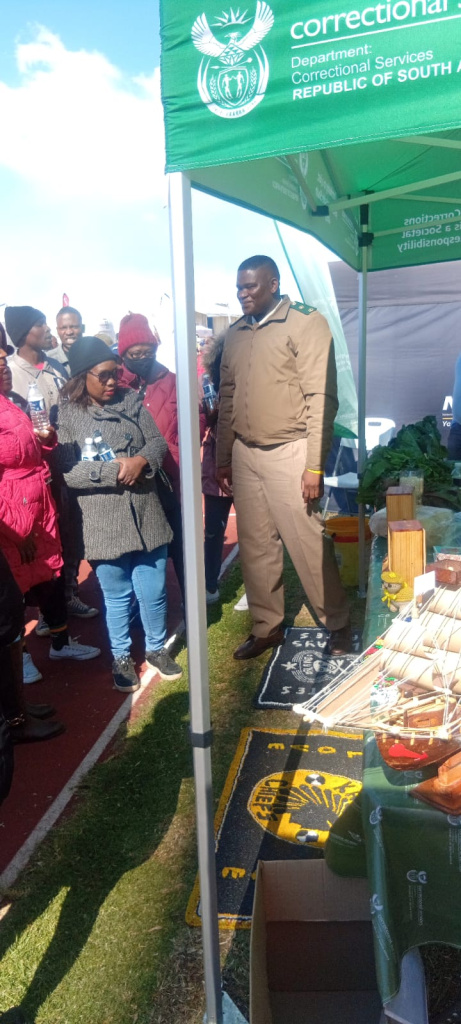
According to Mogapi, successful offender reintegration is essential because the majority of offenders will eventually return to their communities.
“The goal of correctional services is not only to correct but to restore,” he says.
Social workers prepare offenders for release by equipping them with practical life skills, job readiness and coping strategies. Community Corrections social workers continue this support by working with parolees, probationers and their families to strengthen reintegration and reduce the likelihood of reoffending.
Meeting Challenges with Professionalism and Compassion
Social work within DCS is both rewarding and demanding. Practitioners often encounter offenders resistant to change, high caseloads, limited resources and the emotional impact of working with trauma daily.
Despite these challenges, Mogapi emphasises the importance of building trust through respect, consistency and a non-judgemental approach. Continuous supervision, teamwork and professional support help social workers maintain their own wellbeing while delivering quality services.
A Career Grounded in Values
To become a social worker in DCS, individuals must obtain a Bachelor of Social Work degree from an accredited university and register with the South African Council for Social Service Professions (SACSSP) – a legal requirement for practising in South Africa.
Beyond academic qualifications, successful social workers possess strong counselling and communication skills, emotional intelligence, integrity, empathy and respect for human dignity.
A Career That Changes Lives
Reflecting on his career, Mogapi says the greatest reward comes from witnessing transformation.
“There is nothing more fulfilling than seeing someone who arrived angry, hopeless and broken take responsibility for their actions, develop new skills and reconnect with their family. It is especially rewarding to meet former offenders who tell you that the guidance they received helped them change their lives.”
Every successful rehabilitation journey represents more than an individual achievement – it means one less victim, stronger families and safer communities.
Mogapi encourages learners and students considering social work to approach the profession with dedication, compassion and a genuine desire to serve others.
“Study hard, earn your qualification and remember that social work is built on ethics, knowledge and respect for human dignity. The work can be emotionally demanding, but it is deeply rewarding. If your goal is to help people change and contribute to safer communities, then DCS offers an opportunity to make a meaningful difference.”
Indian delegation concludes benchmarking visit, shares key learnings with DCS 17 July 2026

The Indian Academy of Prisons and Correctional Administration concluded its week-long benchmarking visit with a meeting with the management of the Department of Correctional Services (DCS), during which the delegation shared key observations and lessons from visits to correctional centres in Gauteng and KwaZulu-Natal. In his closing remarks, Acting National Commissioner Luckyboy Mathiba welcomed the opportunity to host the Indian delegation, describing the exchange as a valuable platform for sharing best practices and strengthening cooperation in advancing correctional services. He said engagements of this nature contribute meaningfully to improving correctional infrastructure, operational efficiency and rehabilitation programmes.
Minister Groenewald conducts surprise oversight visit to Johannesburg Correctional Facility
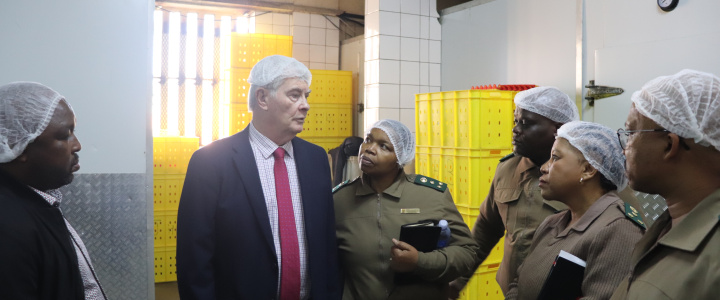
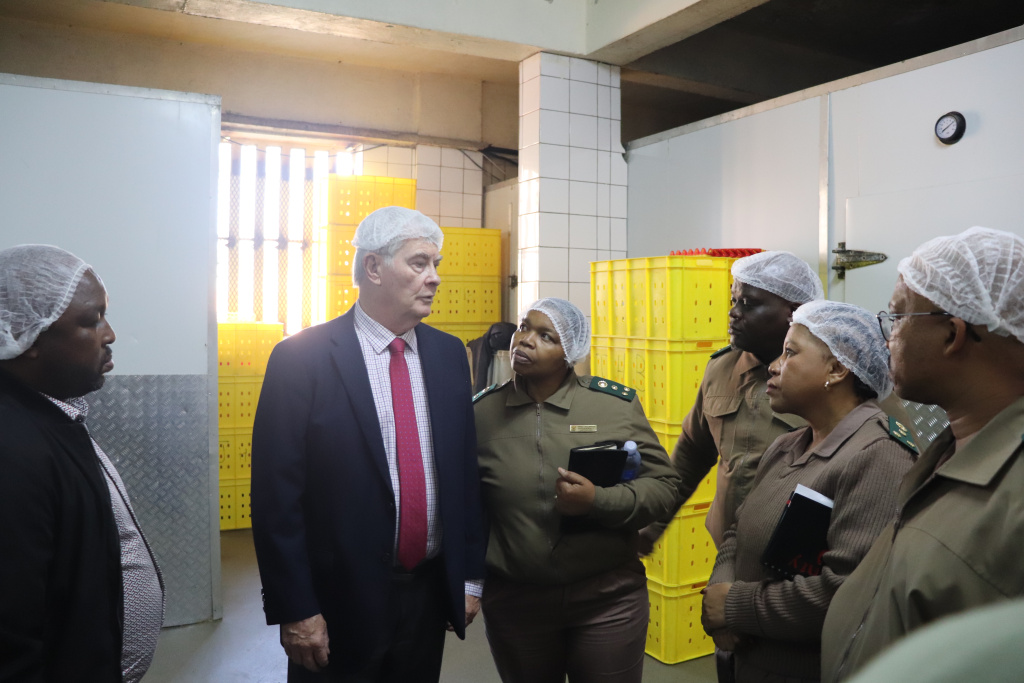
Minister of Correctional Services, Dr Pieter Groenewald, conducted an unannounced oversight visit to the Johannesburg Management Area yesterday (Wednesday, 8 July 2026).
The visit forms part of the Minister’s national programme to assess operations and challenges across correctional facilities, ensuring compliance with the Correctional Services Act and constitutional obligations.
Minister Groenewald began his inspection at the Johannesburg Female Correctional Centre, undertaking a comprehensive walkabout to assess conditions and service delivery for female offenders. He visited the Elderly Unit, Kitchen, Hospital, Mother and Baby Unit, Administration block, Basement, and Salon.
He also conducted a non-contact visit to test the functionality of the public address (PA) system used for offender communication, stressing that clear communication channels are critical for safety and order.
Accompanied by members of the management area executive, the Minister urged officials to address any identified gaps immediately to uphold dignity and security for all offenders.
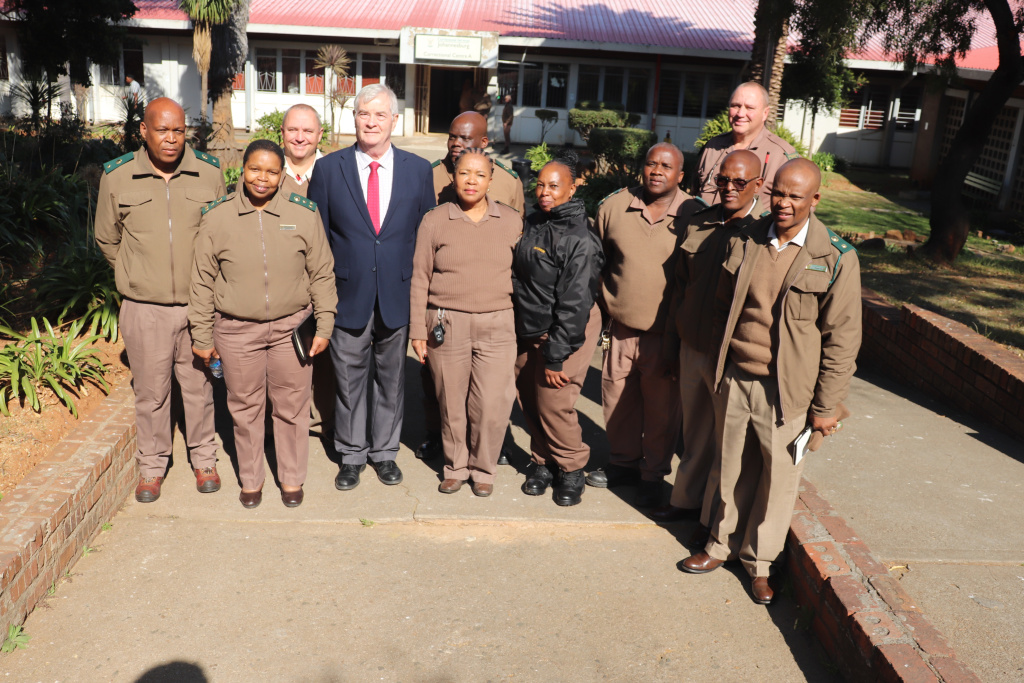
The Minister proceeded to the Medium A kitchen to assess food preparation processes, hygiene standards, and overall operations. Officials shared the daily challenges faced at the remand detention facility.
Heads of centres were given the opportunity to raise operational concerns. Key issues raised include:
- Overcrowding, with management pointing to illegal immigrants as a major contributor to rising inmate numbers.
- Dilapidated infrastructure requiring urgent attention.
The Minister also expressed concern about cleanliness in some areas and directed that gardens be maintained at all times to ensure a clean and dignified environment.
In closing, Minister Groenewald instructed the area executive management team to submit a comprehensive report outlining the challenges faced in the Management Area, along with proposed interventions.
Open bids
National Commissioner Thobakgale Reminds Guardians of Their Responsibility Towards Parolees
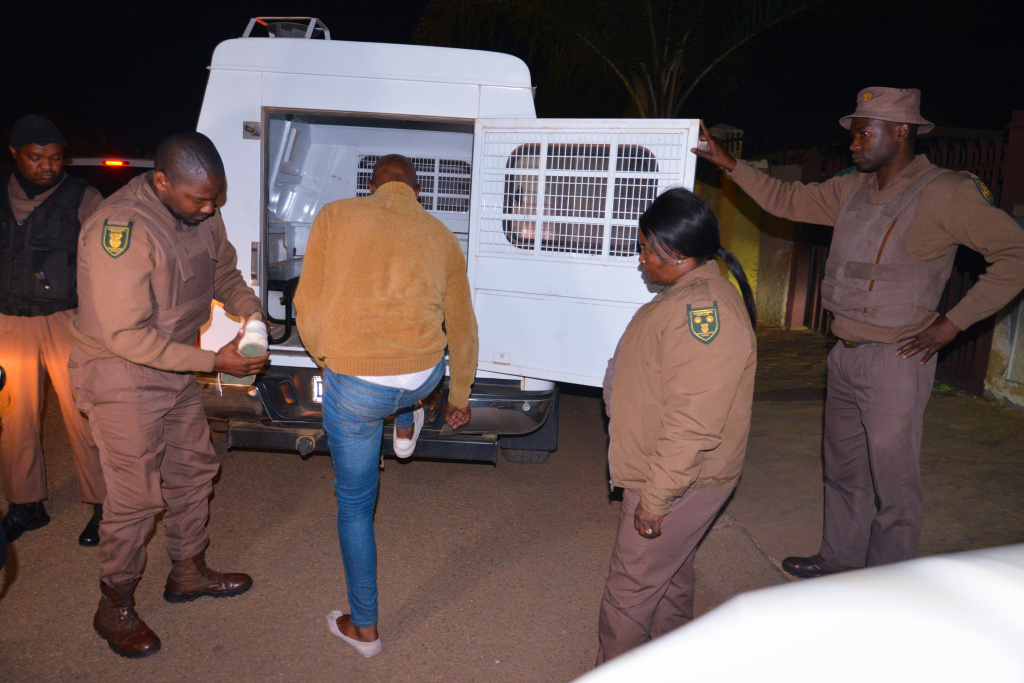
The Department of Correctional Services (DCS) National Commissioner (NC), Mr Makgothi Thobakgale, has raised concern over guardians neglecting their responsibility to support parolees. His remarks follow observations made during an unannounced parole monitoring operation in Mamelodi, Gauteng, on Friday night, 22 August 2025.
NC Thobakgale stressed that the successful reintegration of parolees depends largely on the guidance and oversight of their guardians. He also urged communities to report instances of non-compliance with parole conditions.
“Guardians play a crucial role in helping parolees reintegrate successfully. They are expected to provide consistent guidance and ensure adherence to parole conditions. Unfortunately, some parents become overly defensive when violations occur, while others are unaware of the parolees’ whereabouts or allow them out at night, contrary to their restrictions. Community members must also step in and report violations,” said NC Thobakgale.

The operation in Mamelodi formed part of the nationwide parole monitoring campaign targeting offenders convicted of Gender-Based Violence and Femicide (GBVF). Conducted under the Women’s Month programme, the initiative aims to reduce reoffending.
“We focused on Mamelodi due to the high GBVF-related parole caseload. It is critical to ensure that these individuals do not reoffend,” explained NC Thobakgale.
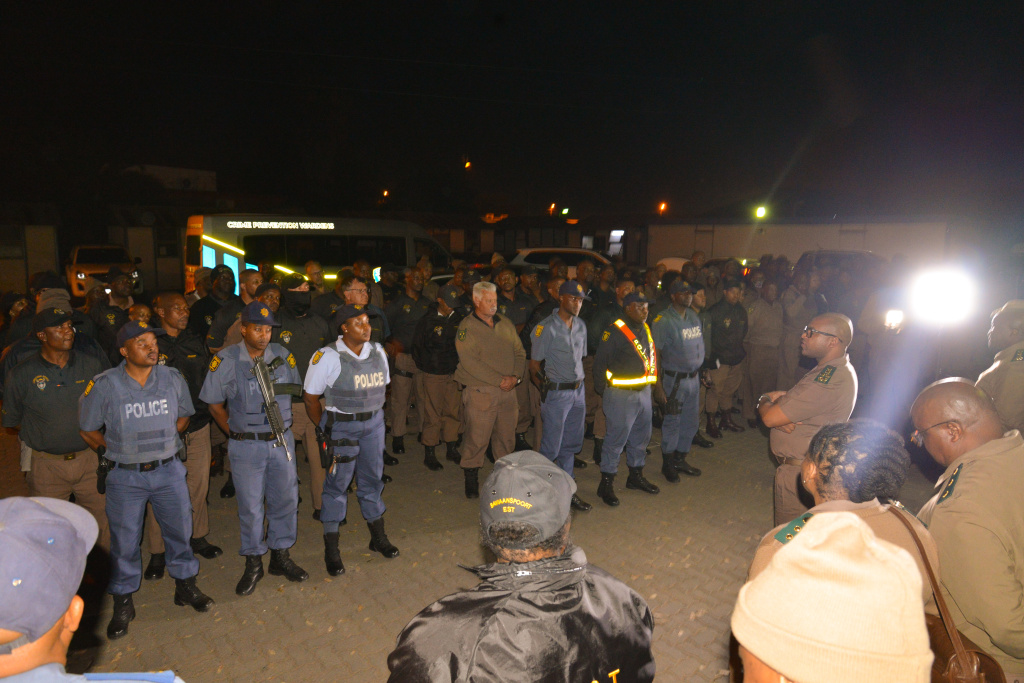
The joint operation, involving the EST, SAPS, and Gauteng Crime Prevention Wardens, visited 44 parolees’ households.
Following the operation, NC Thobakgale directed Community Corrections officials to re-educate guardians about their responsibilities. Where necessary, parolees may be required to appoint more suitable guardians.

Warnings were issued to parolees absent during the visits, with NC Thobakgale cautioning that persistent violations could result in the revocation of parole. One parolee was immediately recommitted to a correctional facility after being found consuming alcohol in breach of his conditions.
DCS Choir participates in 2024 Comrades Marathon opening ceremony

The Department of Correctional Services (DCS) participated in the official opening of the 97th edition of the Comrades Marathon and Expo at the Inkosi Albert Luthuli International Convention Centre in Durban on 6 June 2014. The DCS choir was on hand to render a musical item and mesmerised the international audience with their “Sigijima iComrades” song.
KwaZulu-Natal Regional Commissioner, Mnikelwa Nxele graced the occasion and echoed National Commissioner, Makgothi Thobakgale’s well wishes to all DCS athletes who will be participating in the ultimate human race.

Speaking on the sidelines, Director: Employee Wellness, Sandile Mthembu said he was happy to be part of the 97th Comrades Marathon edition. “We are excited that as DCS, we are at the Comrades Marathon yet again with 271 runners. We wish to extend a special appreciation to our partners, Athletic South Africa, for their support. Through our participation as DCS, we are advancing our wellness agenda. The type of environment we work in requires us to be fit,” said Mthembu.
This year’s edition is the 49th up-run since the start of Comrades Marathon and is considered the most difficult.
President of Athletics in DCS, Motsamai Maqoawane wished DCS runners well in this year’s race. “We are grateful to be at this official opening of the Comrades Marathon. We have also realised that working hand-in-hand with Comrades is advancing our departmental cause for a fit and healthy workforce. We are also indebted to our choir from Durban Correctional Facility for being available to support us at this official opening. With this type of support, we will go far,” he said.

DCS achieved 85% of its 2023/2024 annual performance targets

The Department of Correctional Services (DCS) Senior Management convened for the 2023/24 fourth quarter National Management Performance Review Session on Friday, 24 May 2024.
The Department of Correctional Services (DCS) Senior Management convened for the 2023/24 fourth quarter and annual National Management Performance Review Session on Friday, 24 May 2024.
The virtual session afforded all the regions and branches a platform to table their presentations highlighting areas of underachievement as well as areas on which they met the performance standards as per set targets. Additionally, the re-view session allowed Management to evaluate progress for the financial year and offer input on areas that require improvement in 2024/25. By instituting quarterly performance review sessions, DCS ensures that officials are carrying out their responsibilities and contributing positively to the department’s overall outcomes.

Deputy Commissioner (DC) Strategic Management, Anbigay Naicker, kicked-off the virtual session by providing a broad outline of performance during the financial year covering a number of factors encompassing targets achieved, not achieved, Medium Term Strategic Framework (MTSF) performance, performance per programme, analysis of root causes, to mention a few.
The Department achieved 35 out of 41 annual targets for the 2023/24 financial year, which translates to 85% performance. DCS annual performance dropped by only 2% com-pared to the 2022/23 financial year. Three Programmes: Care, Rehabilitation and Social Reintegration achieved 100% of their annual targets. These programmes have achieved this commendable feat for three years in succession. Incarceration achieved 86%, with Administration trailing further behind with 50% performance achievement.
The regional outlook of the annual performance saw the Western Cape emerging as the best performing region with a phenomenal 97% achievement, followed by KwaZulu-Natal and Free State and Northern Cape with 94% each. The Eastern Cape (93%), Limpopo, Mpumalanga and North West (90%) and Gauteng (81%) also performed exceptionally well.
As part of his presentation of the Financial Report, acting Chief Financial Officer (CFO), Lebogang Marumule indicated that one prevalent factor that caused some regions and branches to fall short of their goals is the inadequate funding due to cost-containment measures. “We should come up with mechanisms to reach targets without major financial implications even as we continue to implement cost containment measures,” stated acting CFO Marumule.

In an attempt to close the margin at SMS level in so far as gender representation is concerned, the acting Chief Deputy Commissioner, Human Resources, Linda Bond mentioned that the Department must recruit and appoint more female managers to comply with Employment Equity (EE) targets. The Department recorded a performance of 47% (70/150) females and 53% (80/150) males against a target of 50% at the end of the 2023/24 financial year.
“Greater effort is required to ensure the appointment and promotion of females into SMS level,” said acting CDC Bond. Some of the key targets that most regions did not achieve on include:
• Overcrowding in correctional facilities;
• Infrastructure projects completed;
• Unnatural deaths in correctional facilities;
• Grade 12 pass rate per academic year; and
• Offenders, parolees, and probationers participating in the Restorative Justice Programme
In the absence of National Commissioner (NC), Makgothi Thobakgale, Chief Deputy Commissioner (CDC) for Community Corrections, Phiko Mbambo facilitated the session. He applauded the regions and branches on their excellent work and encouraged managers to go back to the drawing board to address areas that require improvement.
Hats off to all DCS officials who conquered the Two Oceans Ultra Marathon

The 2024 Totalsports Two Oceans Ultra Marathon took place on 13 and 14 April 2024, in Cape Town, Western Cape.
Almost 14 000 runners, including 166 officials from the Department of Correctional Services (DCS) braced themselves for this year’s spectacular race, which started at Newlands and went through a breath-taking route including Chapman’s Peak, Muizenburg, Kalk Bay, Constantia and finished at the University of Cape Town Rugby Stadium, Rondebosch Campus.
The Two Oceans Ultra Marathon is one of South Africa’s most prestigious and big marathons that takes place annually, whereby runners from across the world compete in the 56km and 21km races.
Onalenna Khonkhobe from Nedbank Running Club is this year’s overall winner in the male category, finishing the gruesome 56km in 03:09:30, while Gerda Steyn, from Phantane Running Club finished first in the female category in 03:26:54. This was her 5th win in a row. Mbuyiseni Yaka (Male) from Modderbee Management Area and Ziphindile Dlamini (female) from Witbank Management Area are DCS top runners after finishing the race in 3:58:49 and 4:46:23 respectively.

National Commissioner, Makgothi Thobakgale met with the runners after the race to congratulate them for participating and conquering one of the most challenging races in the country. “The management of the department is here to support and encourage officials to participate in such sporting activities that contribute positively towards their well-being and vitality. We are also here to engage with the runners, get to understand the process they undergo as they prepare for the race, and to reflect on how they experienced the race. We also recognise these marathons as a ground to encourage more officials to participate and have the courage to do it and keep at it,” said National Commissioner Thobakgale.
Both DCS top runners, who were also the top runners at the 2023 Comrades Marathon, expressed their excitement for finishing the race in impressive times. “I cannot say that it was easy, but I am glad that I gave it my best, and I am happy with the results,” said Dlamini. Yaka, who also received a silver medal for finishing the race in under 4 hours, mentioned that anyone can participate in this marathon, provided that they prepare adequately and take part in the qualifying road races such as halfmarathons. National Commissioner Thobakgale awarded the two top runners with trophies and wished them well as they prepare for the upcoming Comrades Marathon
The race results are as follows:

DCS partners with the African Union to curb drug and substance abuse in the SADC region

The African Union (AU) has started integrating traditional leaders in drug dependency prevention, treatment and care to widen the reach of community interventions to address the growing burden of substance use and related mental health disorders on the continent.
These interventions range from prevention to detection, treatment, rehabilitation and reintegration. The Department of Correctional Services (DCS), together with the South African Development Community (SADC) member states, National House of Traditional and Khoisan Leaders, Departments of Health, Social Development, Cooperative Governance and Traditional Affairs and other stakeholders gathered in Sandton Protea Hotel from 8 April 2024, for the SADC Traditional Leadership Drug Demand Reduction (DDR) consultation.
The four-day session, which concludes on Thursday, 11 April 2024, aims to comprehend and find solutions for the rising drug trafficking in the SADC region. A pilot national network of traditional leaders on Drug Demand Reduction was initiated in South Africa in 2022 during a meeting organized by the African Union Commission in collaboration with the United Nations Office on Drugs and Crime (UNODC). The
meeting was aimed at affirming the role of traditional leaders as first line responders in addressing the challenge of drugs at community level.
Delegates from Lesotho, Botswana, Angola, Comoros, Democratic Republic of Congo, Eswatini, Madagascar, Malawi, Namibia, South Africa, Zambia, Zimbabwe, Seychelles, Mozambique, Tanzania and Mauritius presented drug challenges in areas under the jurisdictions of Traditional Leaders. Their presentations revealed a correlation between the challenge of drugs and high unemployment rate, curiosity and experimentation, peer pressure, poverty, ill-discipline, adolescent stage, prescription drugs and trauma. According to the Pan African Epidemiology Networks on Drugs Use, 40% increase in drug consumption is expected in Africa by 2030. Mostly used common drugs in Southern Africa include heroin, alcohol, cocaine, nyaope, khat, cannabis, ecstacy, mandrax, ATS, tramadol, inhalants, codeine, benzhexol, OTC, ATS, bluemash, and benzhexol.

Addressing the delegates from the 16 countries and a number of stakeholders, the Deputy Minister of Justice and Correctional Services, Nkosi Phathekile Holomisa outlined measures put in place by DCS to tackle illicit drugs, substance abuse and health is- sues associated with utilization of drugs, focusing on prevention and treatment as some of the offenders incarcerated in Correctional Facilities suffer from addiction.
“We have developed a bespoke Substance Abuse Programme (SAP) which seeks to help offenders, probationers and parolees who are addicted to Illicit drugs and substance abuse as a foundation of their rehabilitation. This programme is delivered by DCS social workers and other partners such as the South African National Council on Alcoholism and Drug dependence (SANCA), Cape Town Drug Counselling Centre (CTDCC), Alcoholics Anonymous (AA), Narcotics Anonymous (NA) and Alma Mater Akademie in Substance Abuse,” said Deputy Minister Holomisa. Prince Zolile Burns-Ncamashe, Deputy Minister for Cooperative Governance and Traditional Affairs added that “Traditional Leaders remain the custodians of culture, customs and discipline in many parts of the African continent. The battle against this pandemic needs a collective approach which foster inter-governmental organisations, and public-private sector partnerships.”

Chairperson of South African National House of Traditional and Khoi-San Leaders, Kgosi Thabo Seatlholo said the problem of drugs and substance abuse is not only mainly experienced in cities as they were historically. “Young people in traditional communities are falling prey to drug addiction and these places a burden on rural communities. We need to join hands together to eradicate the problem of drug abuse,” concluded Kgosi Seatlholo